
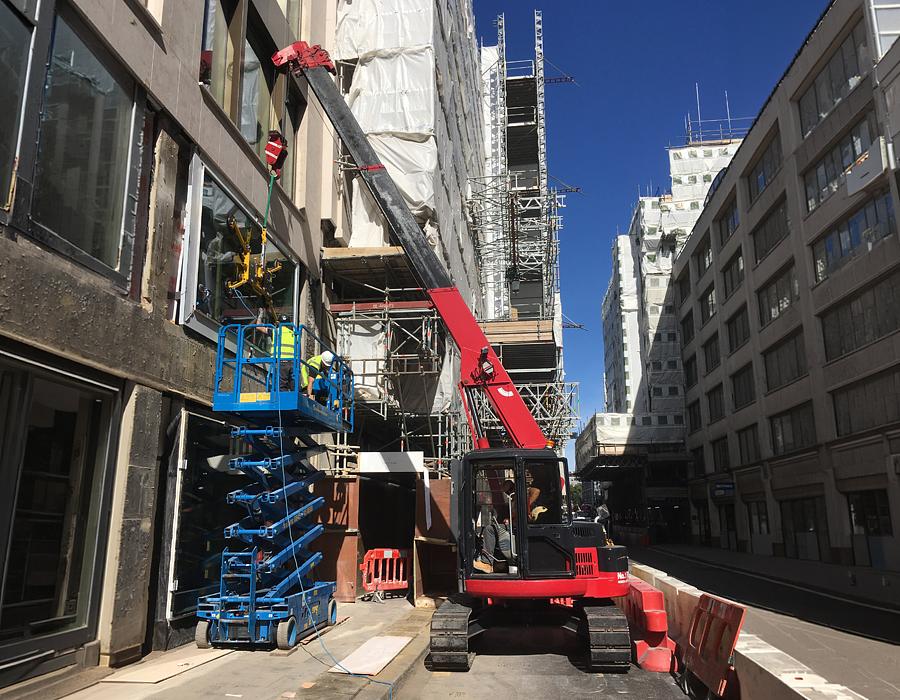
For contractors working with narrow side passages, sloping ground or restricted courtyard access, the lift itself is often the easy part. The real challenge is getting the right equipment into position. Restricted access, uneven or unstable ground, and tight tolerances on delicate materials like glass all rule out a standard mobile crane before the job even starts. This is the gap that mini crawler cranes were built to fill.
The Problem With "Normal" Cranes on Restricted Sites
Plenty of sites simply don't offer a full-size mobile crane anywhere to stand. A gate or side passage might be little more than a metre wide. The ground itself might be sloped, rutted, soft after rain, or otherwise unable to take the point-loading of a heavy machine. Add outrigger clearance and a wide swing radius into the mix and you're often looking at road closures and a machine that physically can't reach the load position at all.
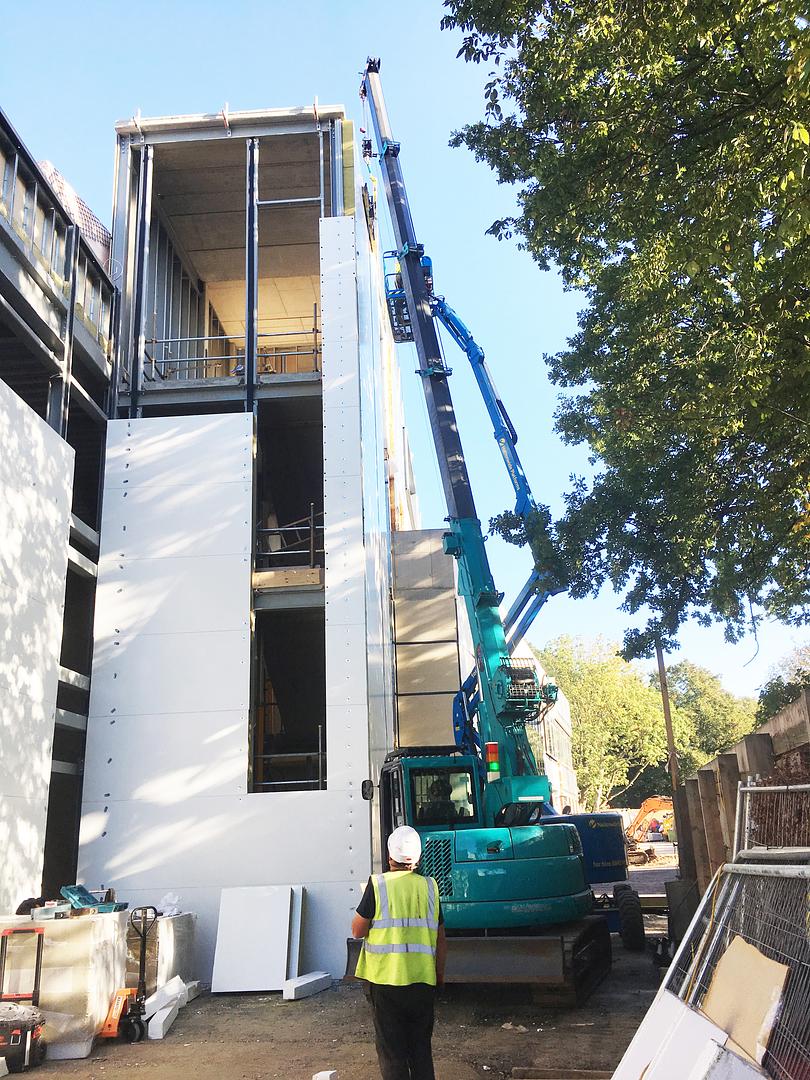
Some mini crawler cranes can pass through standard doorways, gates and tight site access, while their low ground-pressure tracks travel across paving, rough ground and uneven terrain with minimal disruption. Despite their compact size, they can still lift structural steel, glazing, plant equipment and prefabricated building sections.
Where Mini Crawler Cranes Make the Difference
- Confined access sites – courtyards, narrow side passages, tight urban plots and anywhere a mobile crane simply has nowhere to set up.
- Rugged or uneven terrain – sloped gardens, building plots mid-groundworks, rough or unmade ground where a wheeled crane risks getting bogged down or unstable.
- Glazing installs in confined spaces – precise, low-speed placement of large glass units into orangeries, roof lanterns and curtain walling where there's no room for error and no room for a bigger machine.
- Rear garden extensions and orangeries – lifting ridge beams, glulam timbers and structural steel into position without craning over the roof from the street.
- Loft conversions – getting steel beams up through the building or over a low-rise roofline where a static crane can't get an angle.
- Garden rooms and studios – placing modular or SIPs panel sections onto prepared bases at the rear of a property.
- Basement and lightwell projects – lowering plant, precast units or waterproofing materials into confined excavations.
- Plant replacement – swapping heavy boilers, ASHPs or AC condensers on sites with no vehicle access.
In each case, the appeal is the same: track-mounted stability on ground a wheeled crane can't cross, a compact footprint that clears access a mobile crane can't fit through, and enough capacity and reach to do a mobile crane's job in a space and on terrain a mobile crane will never manage.
What to Check Before You Hire or Buy
If you're looking at a machine for a restricted-access or uneven-terrain lift, the numbers that matter are:
- Capacity at radius - don't just look at maximum tonnage, look at what the crane can lift at the radius your job needs.
- Stowed width and height - will it clear your gate, doorway or side passage?
- Ground bearing pressure - critical if you're crossing a patio, suspended slab or unmade ground.
- Outrigger/track footprint when working - some machines need very little extra space to set up; others need more room to spread.
- Hours and service history - on the used market, this tells you far more about remaining life than age alone.
Our Current Mini Crawler Crane Range
At Used Mini Cranes, our crawler crane stock is exactly the kind of equipment suited to this work - inspected, sourced from trusted brands, and ready to go straight onto site. Current stock spans a range of capacities, including:
- Nippon Sharyo MCC294 - 2.9t x 1.5m, ideal for the tightest access jobs
- Maeda LC785 - 4.9t x 2.1m, with multiple low-hours units currently available
- Sunward SWTC05B - 5.0t x 2.1m, a popular mid-capacity workhorse
- Sunward SWTC10 - 10.0t x 2.5m, for heavier steel and panel lifts
- Hitachi ZX210LC-3 - 10.0t x 2.0m, for jobs that need extra muscle without losing manoeuvrability
That spread - from sub-3-tonne machines for the narrowest access right up to 10-tonne units for heavier structural lifts - means most restricted-access and rough-terrain projects can be matched to a machine without over- or under-specifying.
Ready to Find the Right Machine?
Every one of our machines is inspected and comes with full specification and history, so you can match capacity, access and ground conditions to the job rather than guessing. Browse our current crawler crane stock or get in touch and we'll help you find the right fit for your next restricted-access lift.
Author: Sarita Singh